
From 19th on the grid to triumph: the psychology of Kimi Antonelli's Monza comeback
7 September 2026From -102 points to the top of the championship: the real resilience of Marc Márquez
14 September 2026Within the space of a week, Italian football produced two textbook cases in the psychological management of the relationship between a coach and their club. Marco Giampaolo was sacked by Cremonese three hours after knocking Parma out of the Coppa Italia: the team had won, but the decision had already been communicated before kick-off. Fabio Grosso was relieved of his duties at Fiorentina in the dead of night, just hours after the club had publicly declared confidence in him, and in the following hours several news outlets (Corriere dello Sport, La Repubblica, La Gazzetta dello Sport) reconstructed a heated phone exchange between Grosso and sporting director Fabio Paratici over summer transfer decisions — a detail not confirmed by the club's official statement, which simply announced the decision without explanation. Two different endings, but the same underlying question: what happens, psychologically, in the room where the decision to sack a coach is made — and what does the person on the receiving end of that decision go through? Research on sport organizational psychology and sports economics offers sturdier answers than the next-day emotional narrative might suggest.
Author Fabio Zarra
01 — THE PARADOX OF THE USELESS WIN: WHEN THE DECISION COMES BEFORE THE FACTS
The Giampaolo case is the most instructive because it makes visible a mechanism that normally stays hidden behind the headlines: the decision to sack a coach almost never stems from the latest result, but from an overall judgement already formed, one that the next result — win or loss — doesn't alter the course of. This is exactly what economic research on so-called managerial turnover in sport has documented for more than a decade.
De Paola and Scoppa's (2011) study of a large sample of coaching changes in Italian football showed that clubs systematically tend to overestimate their own ability to identify the optimal timing and choice of replacement: on average, a sacking produces no significant improvement in performance compared with comparable situations where the club chose not to change its coach. A similar conclusion emerges from the German study by Heuer, Müller, Rubner, Hagemann and Strauss (2011), published in PLoS ONE, which, with an extremely tight statistical margin, concludes that sacking a coach mid-season has essentially no effect on the team's subsequent performance.
If changing coach is not, on average, an effective technical lever, why do clubs keep resorting to it so often? The most widely accepted answer in the literature is known as the ritual scapegoat hypothesis: a sacking works less as a technical correction and more as a symbolic gesture aimed at fans, media and, at times, ownership itself — a way of showing that something is being done, regardless of its actual effectiveness.
Even more useful for reading the Giampaolo case is the work of Arnulf, Mathisen and Hærem (2012), published in the journal Leadership, who conducted a genuine natural experiment across twelve seasons of Norway's top division: reconstructing what would have happened had the sacked coach stayed in place, the authors show that in many cases the team would have improved anyway — sometimes faster — even without a change on the bench. The authors describe decision-makers as "fooled by randomness": a club that decides based on a handful of recent events (a run of poor results, or conversely a sudden acceleration in the breakdown process) risks mistaking random performance fluctuations for a definitive judgement on the person.
In this framework, Cremonese's Coppa Italia win isn't a fact the club ignored out of inconsistency: it simply arrived after the overall judgement had already crystallised, following a pattern of decisional drift that organisational research observes outside of sport too — once a break-up decision has been made, subsequent signals get processed to confirm it, not to call it back into question.
02 — WHEN TRUST BREAKS DOWN, NOT (ONLY) THE TECHNICAL PROJECT
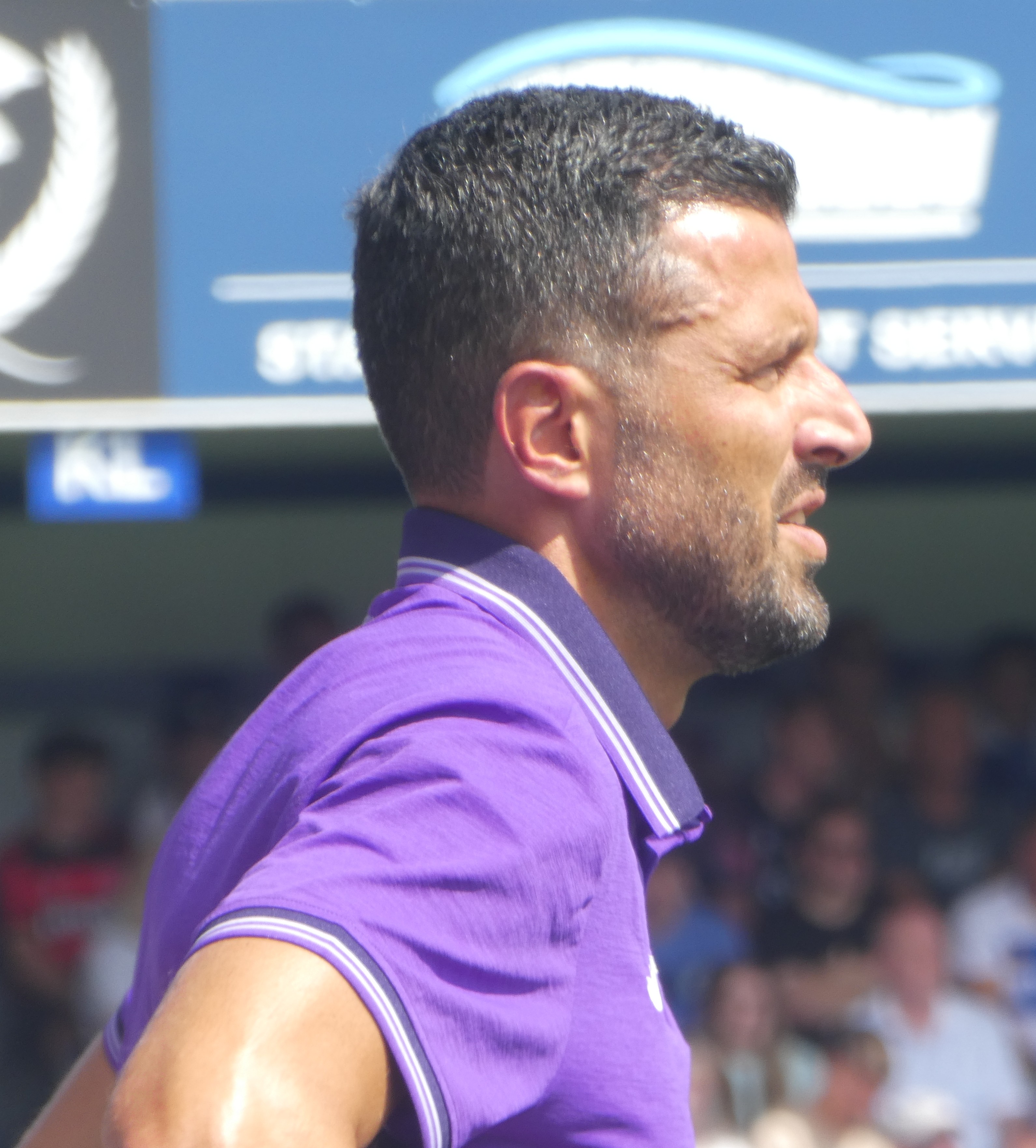
The Grosso case follows a different, complementary dynamic. The club's official statement, released at 11:23pm on Sunday 6 September, is limited to a single line: "ACF Fiorentina announces that Fabio Grosso has today been relieved of his role as head coach of the men's first team", with no explicit reason given. The behind-the-scenes account of a heated exchange with sporting director Fabio Paratici over transfer-market decisions is therefore not a statement from the club, but a converging journalistic reconstruction, reported in the following hours by outlets such as Corriere dello Sport, La Repubblica and La Gazzetta dello Sport, according to which a tense phone call between Grosso and Paratici — in which the coach reportedly voiced strong doubts about the squad built over the summer, including the sale of Moise Kean — made the break final within a matter of hours.
Regardless of the exact details of that conversation, the very fact that journalistic sources agree on an explicit clash over transfer dealings, rather than on results alone, makes this case a useful example for sport organizational psychology.
Organizational psychology describes this mechanism through the concept of psychological contract breach — the set of unwritten mutual expectations that govern a working relationship beyond the formal contract. Applying this framework to US college coaches, Bravo, Won and Chiu (2019) showed how the perception of broken organizational promises — think of commitments on budget, squad, staff resources — erodes job satisfaction and affective commitment to the club well before any formal break, and is a stronger predictor of intention to leave (or be pushed out) than sporting results alone.
Read through this lens, the clash between Grosso and Paratici, as reconstructed by the press, wouldn't be only about three defeats in as many matchdays: it would be about the coach's sense that the squad built over the summer didn't match what had been agreed — a breach of expectations that, once voiced out loud, makes it almost impossible for the club to backtrack, even when it had publicly declared confidence just hours earlier. The speed of the U-turn — from declared confidence to a nighttime sacking within a few hours — is itself a signal of how much a breach of trust, once made explicit and public, changes the nature of the decision compared with a considered judgement based on results alone.
03 — LIVING ONE STEP FROM THE EDGE: INSECURITY AS A PROFESSION
Beyond the individual cases, a bigger question remains: what does it mean, psychologically, to be a top-level football coach knowing that the sack can come at any moment, regardless of how well the job has been done?
Bentzen, Kenttä and Lemyre's (2020) qualitative study, based on in-depth interviews with six high-level coaches sacked in the same season, identifies five recurring themes in how coaches process the experience: accepting job insecurity as an intrinsic part of the profession; the perception of working for organisations that are not very transparent or professional in how they handle the process; internal micro-political dynamics, often invisible from the outside; result expectations that are vague or shift over time; and a wide range of emotional responses, from anger to relief. One finding stands out in particular: almost all the coaches interviewed knew, in the abstract, that they were at risk — but almost none received clear feedback on the real reasons for the break, a lack of transparency the research identifies as an aggravating factor in the psychological experience of being sacked, more so than the loss of the job itself.
| The paradox of the profession is that insecurity is known and accepted in the abstract, but almost never communicated transparently in the concrete moment it actually happens. |
A second study by the same research group, Bentzen, Kenttä, Richter and Lemyre (2020), followed a larger sample of elite coaches over time, measuring perceived job insecurity at mid-season and psychological well-being at the end of the season: a higher level of perceived insecurity midway through predicted a significant deterioration in well-being and an increase in psychological distress in the following months, regardless of results achieved in the meantime. In other words, it isn't just the sacking itself that weighs on coaches' mental health, but the chronic state of precariousness they live with even when their job, for the time being, isn't on the line.
This third layer of reading allows us to bring the two news stories back together: both Giampaolo and Grosso, like every top-level coach, were working within a framework of structural insecurity that research describes as an integral part — not an exception — of the profession. What changes is the way that insecurity materialised (a decision already made in one case, an explicit breakdown of trust in the other), not the underlying condition in which both were operating.
04 — WHAT REMAINS, FOR THOSE WHO WORK INSIDE A CLUB OR ALONGSIDE A COACHING STAFF
- Communicating decisions transparently, even when they're hard to justify publicly, reduces the psychological harm documented by research on sacked coaches — the absence of clear explanations weighs as much, and sometimes more, than the decision itself.
- Mutual expectations between the coaching staff and the sporting department (transfers, budget, timelines) should be made explicit and checked periodically, not simply assumed: it's in the grey area of implicit expectations that the most abrupt breakdowns are born.
- A technical judgement should be anchored to a defined time span and criteria set in advance, not to a single recent episode: research on decision-makers "fooled by randomness" shows how easy it is to mistake statistical noise for a definitive signal.
- The psychological well-being of the coaching staff isn't an issue to address only in moments of crisis: chronic job insecurity needs to be acknowledged and discussed as a structural part of the role, even when the job itself isn't on the line.
The Cremona and Florence stories will soon end up in the archives of managerial changes. But for those who work daily alongside clubs and coaches, they remain a useful reminder: behind every sacking — won, lost, nocturnal or expected — lies a complex psychological and organisational dynamic that reading the sporting result alone isn't enough to explain.
| SPORT PSYCHOLOGY CENTER Do you work with sports clubs or coaching staff? SPC supports clubs and coaches in managing pressure, internal communication and role transitions, with programmes dedicated to the psychological well-being of coaching staff too. |
REFERENCES
- De Paola, M., & Scoppa, V. (2011). The effects of managerial turnover: Evidence from coach dismissals in Italian soccer teams. Journal of Sports Economics, 13(2), 152–168. DOI: 10.1177/1527002511402155
- Heuer, A., Müller, C., Rubner, O., Hagemann, N., & Strauss, B. (2011). Usefulness of dismissing and changing the coach in professional soccer. PLoS ONE, 6(3), e17664. DOI: 10.1371/journal.pone.0017664
- Arnulf, J. K., Mathisen, J. E., & Hærem, T. (2012). Heroic leadership illusions in football teams: Rationality, decision making and noise-signal ratio in the firing of football managers. Leadership, 8(2), 169–185. DOI: 10.1177/1742715011420315
- Bravo, G. A., Won, D., & Chiu, W. (2019). Psychological contract, job satisfaction, commitment, and turnover intention: Exploring the moderating role of psychological contract breach in National Collegiate Athletic Association coaches. International Journal of Sports Science & Coaching, 14(2), 273–284. DOI: 10.1177/1747954119848420
- Bentzen, M., Kenttä, G., & Lemyre, P.-N. (2020). Elite football coaches’ experiences and sensemaking about being fired: An interpretative phenomenological analysis. International Journal of Environmental Research and Public Health, 17(14), 5196. DOI: 10.3390/ijerph17145196
- Bentzen, M., Kenttä, G., Richter, A., & Lemyre, P.-N. (2020). Impact of job insecurity on psychological well- and ill-being among high performance coaches. International Journal of Environmental Research and Public Health, 17(19), 6939. DOI: 10.3390/ijerph17196939
Journalistic sources: Corriere dello Sport, La Repubblica and La Gazzetta dello Sport (7 September 2026), reconstructions of Fabio Grosso's dismissal from Fiorentina; official ACF Fiorentina statement (6 September 2026).

Fabio Zarra