
Nineteen Years Old, One World Cup Semi-Final: What Really Explains Lamine Yamal's Composure
15 July 2026The number of destiny: two goalkeepers, a 23, and the psychology of lucky numbers in sport
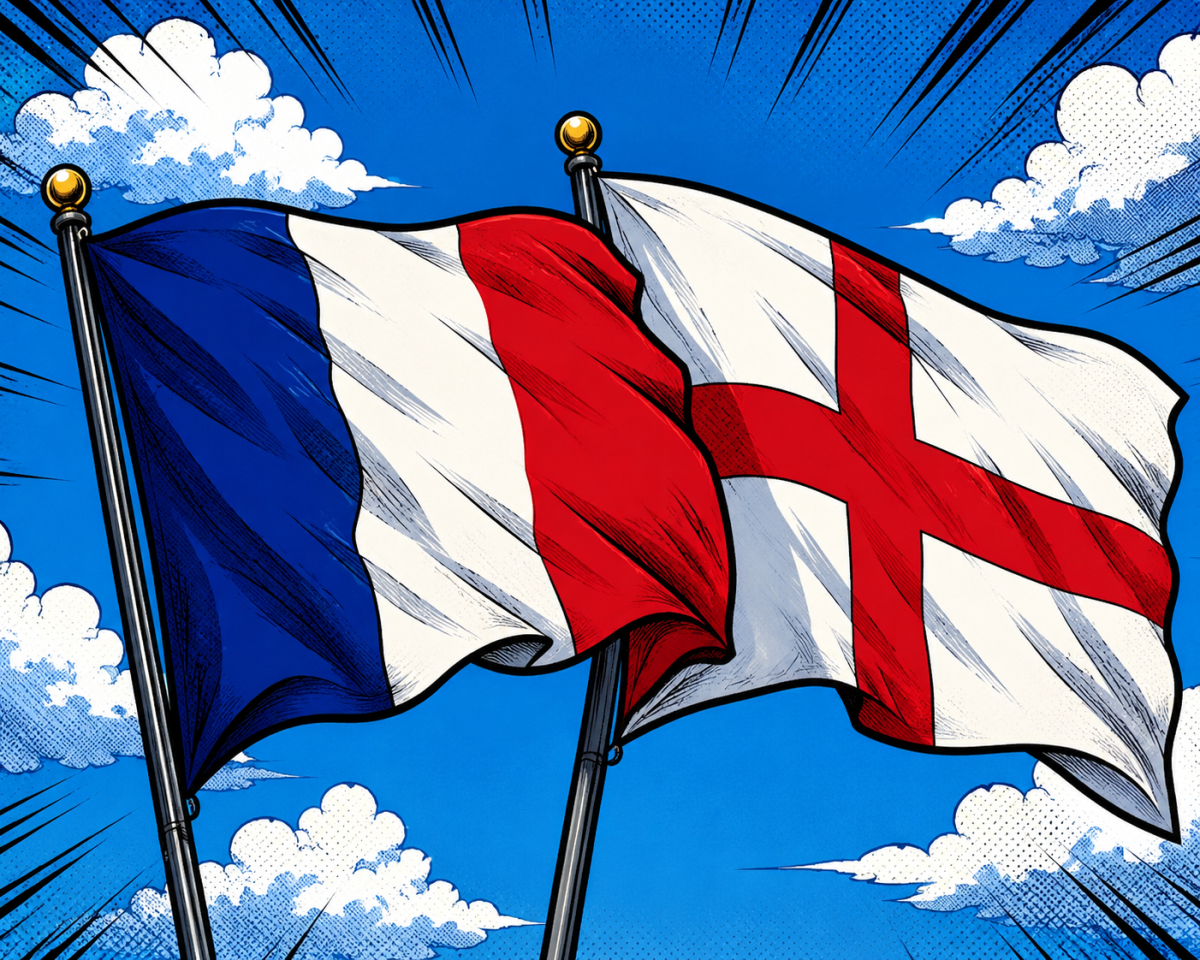
20 July 2026Miami, 18 July 2026. France and England take the field for the World Cup third-place final. A match that, as Tuchel honestly admitted, «nobody wants to play». And yet it has to be played. Performance psychology explains what happens in the minds of athletes — and coaches — when collective motivation is at an all-time low but the cameras are rolling.
Author Virginia Marino www.sportpsychologycenter.com
There's a match in major tournaments that football would gladly do without organising, and players would gladly do without playing: the third-place final. They call it the “little final,” a diminutive that already says it all. France-England isn't the real final. It isn't even the quarter-final where qualification was at stake. It's limbo: an evening where you've already lost what you wanted, and you play for something nobody ever dreamed of bringing home.
Tonight, at Miami Stadium in Miami Gardens, France and England will live exactly that limbo. Deschamps' Bleus, eliminated by Spain 0-2 in the semi-final four days ago. Tuchel's Three Lions, overturned by Argentina 2-1 — ahead 1-0 in the 55th minute and then overwhelmed by Messi and Lautaro in seven minutes — three days ago. Tomorrow the real final is played, Spain-Argentina at MetLife Stadium in New York. Tonight, psychologically, is the hardest match to face: the one nobody wanted.
Thomas Tuchel said it bluntly on the eve of the match: «Nobody wants to play this game». It was the most honest — and most psychologically significant — statement a head coach could make in this kind of context. And it's worth analysing with the tools performance psychology offers, because behind that sentence lies a case study in how to manage a team when collective motivation is at rock bottom.
01 - THE CONTEXT
France-England: Two defeats, two different stories
To understand the psychology France and England bring to Miami, you need to understand how they exited their semi-finals. Because not all defeats are the same, and the way a team processes its own failure determines the mental state it brings back onto the pitch.
France lost to Spain 0-2 at Dallas Stadium on 14 July. A clear-cut defeat, against a team that was superior on the day, with Lamine Yamal dominant and the French defence in structural difficulty: Oyarzabal's penalty in the 22nd minute, Porro's second in the 58th. Mbappé — 8 goals in the tournament, tied with Messi at the top of the scoring charts — practically invisible. France was the tournament's most anticipated team, with the strongest attack on paper. They went out without scoring. The disappointment, as Deschamps put it, «is proportional to our ambitions».
England lost to Argentina 1-2 at Atlanta Stadium on 15 July. A different kind of defeat — more painful, more avoidable, more tied to human choices. Gordon scores in the 55th minute, England is one step from the feat. Then Tuchel locks the team into a back five. Argentina, who were losing, find courage. Enzo Fernández equalises in the 85th minute. Lautaro heads home in the 92nd (90'+2), assisted by Messi, sending the Albiceleste to the final. «We lost to Messi», said Tuchel. But many in England thought they had lost to Tuchel.
| France ELIMINATED 0-2 BY SPAIN Clear-cut defeat, superior opponent. No room for tactical regrets: Spain were stronger. The disappointment is one of aspiration, not error. Easier to process, harder to accept. | England ELIMINATED 2-1 BY ARGENTINA A lead surrendered late. A widely criticised tactical choice by the head coach. The disappointment is mixed with frustration — «we could have won» — and is psychologically more corrosive. |
02 — THE PARADOX
«Nobody wants to play it»: the motivational crisis of the little final
Tuchel's statement is one of the most psychologically honest heard in this World Cup. It isn't controversy: it's an accurate description of the state both teams are in. But it raises a real problem that performance psychology has addressed for decades: how do you motivate a group of professional athletes for a match that, collectively, nobody feels is theirs?
The Self-Determination Theory by Deci and Ryan describes motivation along a continuum running from intrinsic motivation — doing something because it's internally satisfying, for the sake of doing it — to extrinsic motivation — doing something for external rewards. The third-place play-off is, by definition, a match with almost zero intrinsic motivation: nobody dreamed as a child of lifting the bronze medal. And extrinsic motivation — the bronze itself, the final standings, a few FIFA ranking points — has low perceived value compared to what the players have invested over four weeks of the World Cup.
When both sources of motivation fade, the risk isn't just poor performance: it's emotional disconnection from the match. Players going through the motions without the charge that turns technique into performance. Coaches giving the same instructions as always in a context that doesn't respond the same way.
| «Nobody wants to play this match. Reaching the semi-finals is a great achievement — plenty of major teams stop earlier — but today nobody wants to hear that, not even me.» THOMAS TUCHEL · PRE-MATCH PRESS CONFERENCE, MIAMI, JULY 2026 |
03 — TWO APPROACHES
Deschamps and Tuchel: leadership under low motivation
Faced with the same problem — motivating a team for a match nobody wanted to play — the two coaches adopted diametrically opposite approaches. And each, in his own way, tells us something interesting about the psychology of leadership under extreme conditions.
Deschamps chose authority. According to Virgilio Sport, the French head coach took a “hard-line” approach with the squad: no mental break, no concession to disappointment, immediate focus on the Miami match. «This isn't a friendly, we'll do everything to close out the World Cup well», he said publicly. Behind this toughness there's also an extremely strong personal motivation: tonight is his last match in charge of France after fourteen years. He will be succeeded by Zinedine Zidane. Deschamps has no intention of leaving with a second consecutive defeat.
Tuchel chose honesty. Admitting that nobody wants to play isn't surrender: it's a way of legitimising the players' emotional state, which they probably share, and then working with that state instead of ignoring it. It's an approach psychology would call autonomy-supportive: it acknowledges the group's emotional reality before asking for change. The risk is that this same honesty could be perceived by players as an excuse to disengage — «if the coach says it's worthless, why bother?»
Fletcher and Sarkar's research on Olympic champions showed that the most resilient athletes and groups facing adversity don't deny the difficulty of the situation: they appraise it positively, using it as a springboard for growth. The real test for both coaches tonight is whether they can turn the disappointment of the semi-finals into an energy that, for one evening, makes their players forget they didn't want to be there.
| «The disappointment is proportional to our ambitions. But against England it won't be a friendly: we'll do everything to close out the World Cup well.» DIDIER DESCHAMPS · PRE-MATCH STATEMENT, JULY 2026 |
04 — INDIVIDUAL GOALS
The Golden Boot as a motivational anchor
When collective motivation is low, goal-setting psychology suggests a practical principle: identify specific, difficult, and achievable individual goals that can serve as an anchor for individual performance, regardless of investment in the collective result.
Locke and Latham, in their thirty-five-year review of goal-setting theory, showed that specific and difficult goals produce significantly better performance than simply being told to “do your best” — even in contexts where underlying motivation is limited. Goal specificity focuses attention, increases persistence, and activates problem-solving strategies.
Tonight, this dynamic is highly visible in three players. Kylian Mbappé has 8 goals in the tournament and shares the top of the scoring charts with Lionel Messi — who has already finished his World Cup. One goal tonight could hand him the Golden Boot outright. Harry Kane and Jude Bellingham are on 6 goals each — still theoretically in the running for the award, should Mbappé fail to score. These three don't need to find collective motivation: theirs is deeply personal, specific, and will be measured in centimetres and seconds. For them, the little final isn't the match nobody wants: it's a once-in-a-lifetime opportunity.
It's a mechanism major tournaments know well, and one coaches use consciously: giving strikers room to chase their personal milestones in a match that would otherwise struggle to find collective meaning. The Golden Boot isn't a secondary prize — it's the lever that keeps the temperature high on an otherwise cold evening.
| THE INDIVIDUAL MILESTONES AT STAKE IN MIAMI Mbappé (8 goals): One goal makes him the sole top scorer of the 2026 World Cup, overtaking Messi. The adidas Golden Boot is within reach. It's the most keenly felt “little final” in French football.Kane and Bellingham (6 goals each): Mathematically still in contention, but it depends on what Mbappé does. Both are aiming for the award as an extra personal trophy from an otherwise brilliant World Cup.Deschamps (last match): It isn't a statistical milestone, but it's the heaviest of all. Fourteen years in charge of France: the coach wants a worthy farewell, not a second consecutive defeat. |
05 — PROCESSING DEFEAT
How you take the field after an elimination
Beyond the practical motivations, there's a deeper psychological question affecting both teams: how do you process a heavy defeat within a few days and return to the pitch with enough emotional freshness to play another match?
Weiner's attribution theory offers a useful vantage point. The two teams lost differently, and probably process the defeat differently. France lost to Spain clearly: the perceived cause is external and stable — Spain were stronger — which makes the failure easier to accept. England lost to Argentina after squandering a lead: the perceived cause is partly internal and controllable — we could have managed it better — which fuels rumination and makes the defeat more corrosive.
This means that tonight the two teams could arrive in significantly different emotional states. France might have more inner peace — not the success they hoped for, but a defeat that at least makes sense. England might carry more accumulated resentment — a defeat that stings all the more because it feels avoidable. Resentment, pointed the right way, can become fuel. Pointed the wrong way, it becomes dispersion.
06 — BUTTERFLIES IN FORMATION
How disappointment turns into energy
There's one last question performance psychology raises about this match. Hanton and Jones showed how elite athletes turn pre-match anxiety from debilitating into facilitating — making the butterflies fly in formation, in their famous metaphor. But the little final poses a different, and in some ways harder, challenge: what happens when there are no butterflies? When the dominant emotional state isn't anxiety, but fatigue and the disappointment of elimination?
The answer isn't simple, but research suggests a few paths. The first is refocusing on process: instead of chasing a result that feels meaningless, concentrating attention on what you do in each single moment — the next tackle, the next dribble, the next pattern of play. It's harder to activate collectively, but possible through solid pre-match routines and specific in-game goals (high press, long ball to Mbappé, high defensive line).
The second path is the one Deschamps chose: narrative authority. Telling the team that this match has meaning — «it's my last one, it's how you'll remember this World Cup» — and using that narrative as an emotional frame. It isn't manipulation: it's leadership. Great coaches know that when motivation doesn't come spontaneously from the situation, it has to be built from the story told around it.
The third is Tuchel's: emotional validation before the demand. Telling players he understands how they feel — and then still asking for their best. It's the riskiest of the three approaches, because it requires holding understanding and demand together. But when it works, it produces something the other two paths rarely achieve: genuine willingness instead of mere compliance.
07 — IN CLOSING
The match that teaches the most
There's an irony in the third-place final that's rarely noticed: it's the match that teaches the most about performance psychology, precisely because it strips away every piece of infrastructure that normally supports it. There's no dream of the title. There are no weeks of built-up expectation. There isn't even, as Tuchel said, the desire. What remains is pure work — the ability to be a professional when there's no great emotion pushing you forward.
France and England arrive in Miami with different stories, different wounds, different approaches. They arrive with three individual stars chasing a goal for the Golden Boot and a coach playing his last match after fourteen years. They arrive with the fatigue of four weeks of tournament and the weight of a still-fresh defeat. They arrive, in short, as human beings — not as football machines.
And perhaps that's exactly why some little finals, the real ones, become unforgettable matches. Not because someone wanted to win third place. But because, at some point, someone found the strength to genuinely want to play it. Tonight we'll find out if that strength emerged. In the meantime, psychology has already had its say.
| How do you handle matches you don't want to face? The ability to perform when motivation is low — due to fatigue, disappointment, or a lack of perceived meaning — is one of the most advanced skills in performance psychology. It's trained, not improvised. → BOOK A FIRST CONSULTATION Sport Psychology Center · Professional consultancy, VR training and mental training |
SCIENTIFIC REFERENCES
- Deci, E. L., & Ryan, R. M. (2000). The “what” and “why” of goal pursuits: Human needs and the self-determination of behavior. Psychological Inquiry, 11(4), 227–268. DOI: 10.1207/S15327965PLI1104_01 http://chrome-extension://efaidnbmnnnibpcajpcglclefindmkaj/https://selfdeterminationtheory.org/SDT/documents/2000_DeciRyan_PIWhatWhy.pdf
- Locke, E. A., & Latham, G. P. (2002). Building a practically useful theory of goal setting and task motivation: A 35-year odyssey. American Psychologist, 57(9), 705–717. DOI: 10.1037/0003-066X.57.9.705
- Fletcher, D., & Sarkar, M. (2012). A grounded theory of psychological resilience in Olympic champions. Psychology of Sport and Exercise, 13(5), 669–678. DOI: 10.1016/j.psychsport.2012.04.007
- Weiner, B. (1985). An attributional theory of achievement motivation and emotion. Psychological Review, 92(4), 548–573. DOI: 10.1037/0033-295X.92.4.548
- Hanton, S., & Jones, G. (1999). The acquisition and development of cognitive skills and strategies: I. Making the butterflies fly in formation. The Sport Psychologist, 13, 1–21. DOI: 10.1123/tsp.13.1.1
News sources: ANSA (17-18 July 2026), Virgilio Sport, Sky TG24, Il Fatto Quotidiano, Corriere dello Sport, Derby Derby Derby, Il Globo, goal.com Italia, skuola.net (July 2026). Semi-final results: France-Spain 0-2, Dallas Stadium, 14 July 2026 (goals: Oyarzabal pen. 22', Porro 58'). England-Argentina 1-2, Atlanta Stadium (Mercedes-Benz Stadium), 15 July 2026 (goals: Gordon 55', Enzo Fernandez 82', Lautaro Martinez 89'). Third/fourth place final: France-England, Miami Stadium (Hard Rock Stadium), Miami Gardens, Florida, 18 July 2026, 11:00 PM Italian time. Tuchel's «nobody wants to» statement: ANSA, 17 July 2026. Deschamps' «it hurts, but we want third place» statement: Il Globo, July 2026. Detail on Deschamps' hard-line approach with the squad and players already on holiday mentally: Virgilio Sport, July 2026. Top scorers: Mbappé 8 goals, Messi 8 goals; Kane and Bellingham 6 goals each (source: FIFA.com). Deschamps' successor: Zinedine Zidane (ANSA).
