
“Let's look at what we have”: the De Giorgi phrase that hides a precise science.
18 September 2026On Saturday 19 September Millwall and West Ham meet for the first time in 14 years, and London mobilises 400 officers and special powers. From the fake grenade of 1965 to Heysel, from Hillsborough to the 2026 data: the history, and the science, of a phenomenon England says it has defeated.
Author Fabio Zarra Date 19 September 2026
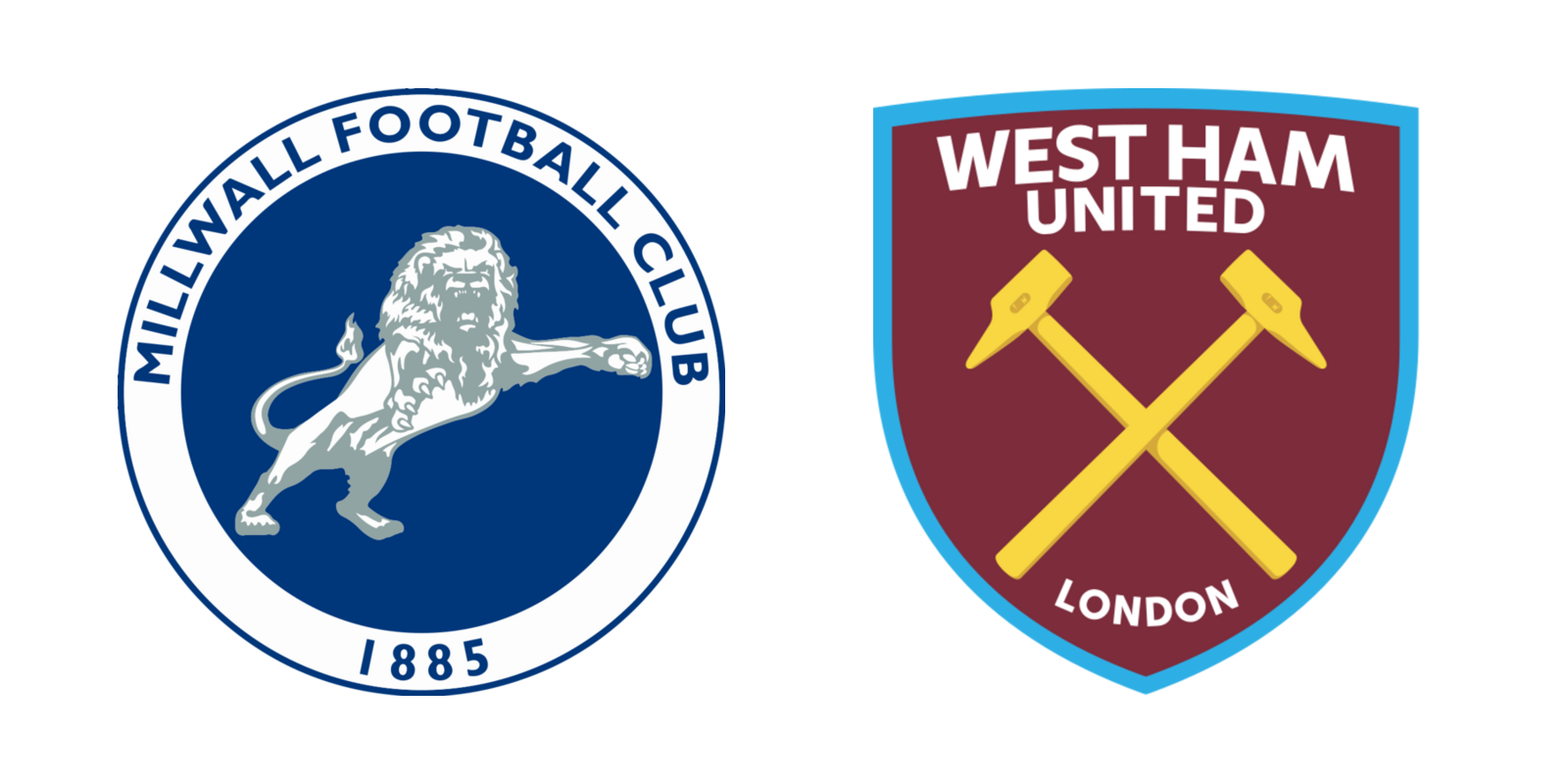
Saturday 19 September 2026, 8 in the morning. In the heart of the City of London a special order comes into force: until 8pm the police can remove anyone who appears about to cause disorder.
A few kilometres away, in Bermondsey, another 400 officers are getting ready for a Championship match, England's second tier. Normally, for a game like this, 60 to 150 are enough.
It isn't a final, and there's no trophy at stake. It's Millwall–West Ham, and one detail explains everything: the two teams haven't met in an official match since 2012.
It's the story of an uncomfortable question. England, which in the 1980s was synonymous with stadium violence, swears it has defeated the hooligans. Is that true? And what does psychology tell us about who those people really are?
01 — THE FACTS
The Docks derby
To understand why the police are holding their breath, you have to go back to the docks of the Thames. Millwall and West Ham were born in the world of the docks and riverside shipyards: two supporter bases of dock workers who depended on rival companies, fighting over the same business. The first meeting was in 1899, in the FA Cup. Since then they have met 99 times, but they often played in different divisions: the derby is rare, and precisely for that reason charged with anticipation.
| SATURDAY'S OPERATION ~400 officers from the Metropolitan Police, against the 60–150 of a normal Championship match Dispersal order: anyone causing disorder can be removed from an area stretching from Tower Bridge to Blackheath Away fans funnelled to a single station, South Bermondsey, which may stay closed to home fans for up to an hour after the match |
25 August 2009: the night at Upton Park
The last time this rivalry truly made the news, it wasn't a league match but a League Cup tie. West Ham's equaliser triggers a pitch invasion, then another. Outside the ground a Millwall fan is stabbed. Among those running onto the pitch is a man with a child on his shoulders: the image goes around the newspapers and outrages the football authorities and the government.
The toll: 80 arrests, a £115,000 fine for West Ham, at least 54 fans banned for life by the club. Former manager Harry Redknapp advised never again letting the two teams meet in a knockout cup. And the police said the violence had been planned, but did not mark a return to the 1980s.
02 — THE HISTORY
The years when English football was frightening
Before recounting them, a clarification: the panic over “hooligans” didn't begin in the 1980s. Historian Geoffrey Pearson showed that the alarm goes back to Victorian England, and that every generation has believed it was living through an unprecedented wave of youth violence. That said, the 1980s really were an abyss.
A fake grenade at Griffin Park (1965)
6 November 1965. Millwall play at Brentford. During the match, a hand grenade flies onto the pitch from the away supporters' section. Brentford goalkeeper Chic Brodie picks it up, calmly examines it and throws it back into his own goal. It was a fake. The brawls, inside and outside the ground, were real.
It's one of the most iconic episodes of that period, and it already contains a clue that researchers would chase for decades: part of fan violence was theatre.
“Let's close the club” (1982)
In 1982 Millwall lose in the FA Cup to modest amateur side Slough Town. Incidents follow so serious that the chairman, Alan Thorne, threatens to close the club.
Luton, 13 March 1985
FA Cup quarter-final. Before, during and after the match, Luton becomes a battlefield: seats ripped from the stands and thrown onto the pitch, an invasion, guerrilla fighting in the streets. Sources give different tolls, up to 81 injured including 31 police officers. Of the 31 arrested, according to reconstructions, many were fans of other London clubs, West Ham and Chelsea included: a clue that for some of them the brawl mattered more than the shirt.
The Thatcher government set up a “war cabinet” on the issue and tried to extend to the whole country the compulsory membership card introduced by Luton. It didn't succeed.
Heysel and Hillsborough: two tragedies, two lessons
29 May 1985, Brussels, European Cup final Liverpool–Juventus. Before kick-off a group of English fans charges the Juventus supporters. A wall collapses. 39 people die, most of them Italian. English clubs are banned from Europe for five years, Liverpool for six; 14 Liverpool fans are convicted of manslaughter.
Four years later, on 15 April 1989, 97 Liverpool fans die at Hillsborough. There were no hooligans here. There was a fatal crush, a failed handling of public order and a part of the press that accused the fans of being drunk and violent. In 2016 the inquest jury ruled that the victims had been unlawfully killed and that the fans had played no part in the tragedy. The last victim, Andrew Devine, died in 2021, after 32 years of care.
It's the hardest lesson in the whole story: the label “hooligan” can become an alibi.
The reforms came quickly. After the Taylor report the grounds of the top two divisions became all-seater. New laws created “banning orders”, bans from attending stadiums: after the disorder at Euro 2000 they went from fewer than 100 to about 2,000 in 2004.
03 — THE SCIENCE
What goes through a hooligan's mind?
If you expect the portrait of a monster, the research will disappoint you. Over half a century psychologists and sociologists have observed fans up close and found four surprising ideas.
1. It's also theatre
In the 1970s a group of researchers led by Peter Marsh studied fans up close and noticed that much of what looked like chaos had rules: chants, threats, charges that stopped short of contact. A ritual of dominance, more display than harm. The fake grenade at Brentford is a good example. But sometimes the theatre goes off script: Luton, Brussels.
2. Status and belonging
Other scholars, from the Leicester school, looked deeper, at the culture of certain working-class neighbourhoods, where toughness and the ability to fight count as social currency. Millwall are almost a symbol of it: their famous chant, “No One Likes Us, We Don't Care”, became the title of a book by ethnographer Garry Robson, who distinguishes the myth of the club from the everyday reality of its fan base. An “outsider” identity, proud to be one. On the opposite side, West Ham have their historic anthem, “I'm Forever Blowing Bubbles”, which their fans have sung for generations.
3. The “we” that becomes “I”
For many fans the team is a form of belonging. For some it's something more: a part of the self. Psychologists call it identity fusion: the boundary between “I” and “we” dissolves, and an offence to the group burns like a personal offence.
A study of 465 Brazilian fans tried to understand what drives violence. It isn't social maladjustment, which was not linked to episodes of violence. It's fusion with the group, combined with the feeling that rivals are a constant threat. A caution: the sample is Brazilian, and applying it to England is a hypothesis. But it has a bright side: the same studies show that the most “fused” fans say they are willing to sacrifice themselves for other fans in danger.
| The glue that holds the group together is the same that, with a rival in front of it, can make it dangerous. — Summary of the findings on identity fusion (Newson and colleagues) |
4. Context changes people
At Euro 2004 in Portugal, English fans, those with the worst reputation on the continent, did not cause the disorder everyone expected. The scholars who observed them credited mainly a non-militarised police approach, which psychologically isolated the violent minority instead of bonding it with the rest of the supporters. Another study on Cardiff City shows that when fans considered the way they were managed legitimate, conflict fell; when they didn't, it came back. The same people, in different contexts, behave differently.
04 — THE NUMBERS
“Eradicated”? Less, but different
The official figures from the British Home Office for the 2025/26 season tell a two-sided story.
| THE 2025/26 SEASON IN NUMBERS (ENGLAND AND WALES) | |
| 1,963 | arrests and other police actions: about 4 per 100,000 spectators, out of roughly 48 million attendances |
| −27% | the fall in arrests in the years before Covid (2015/16–2018/19) |
| 159 | matches with serious incidents, 50% more than the previous year, with more organised episodes |
| 2,460 | banning orders in force: the highest since 2011/12 |
| 34% → 7% | share of alcohol-related offences between 2010/11 and today; Class A drugs are at 17% |
On one hand, arrests are few compared with the crowds filling the stadiums. On the other, when something happens, it happens in a more serious and more organised way. According to scholars, modern hooliganism looks less like a spontaneous brawl and more like an appointment: pre-arranged clashes between structured groups, far from the stadiums. And the fuel changes: less alcohol, more drugs.
A curiosity that concerns this very Saturday: West Ham fans are, for the third year running, the ones with the most banning orders in force in England and Wales (121). The Home Office warns, however, that proportions can't be calculated against the total number of fans: it doesn't mean they are the most violent.
Wembley, 11 July 2021
Euro final, England–Italy. Around 2,000 people without tickets enter the stadium through 17 breaches of disabled entrances and emergency exits. In an episode described as “appalling” by Baroness Casey's report, a man poses as a steward and leads a disabled child away from his father to get past a gap. Casey called the evening a “near miss”: tragedy was narrowly avoided, with alcohol and drugs among the key factors.
It wasn't hooliganism in the strict sense: it was a crowd out of control. But it shows how the risk, in English football, has not disappeared. It has moved.
West Bromwich–Wolverhampton, 2024
An FA Cup match was suspended for 38 minutes because of clashes in the stands, with officers attacked, objects thrown and flares. In the end: 43 arrests.
A note on method, to avoid mistakes: time series should be read with caution, because the rules change. Possession of Class A drugs became a “football offence” in 2022, entering without a ticket in 2026. Part of the variation depends on what is being counted.
05 — IN CLOSING
What's gone, and what remains
England has not eliminated the hooligan: it has made violence more costly, more hidden and rarer. That's not nothing, but it's not the same as defeating it.
The point, for psychology, is that the mechanism hasn't gone away. If what the studies on identity fusion suggest is true, historic rivalry and the sense of threat remain the fuel, and a derby returning after 14 years brings them back on stage. It's a hypothesis, not a prediction.
Another figure gives pause for thought: 60% of the banning orders in force concern people aged 18 to 34, and in the last season the matches with public-order incidents involving underage fans numbered 516 (a figure the compilers attribute in part to better recording). For those who work with clubs, coaches and young fans, it's reasonable to think the culture of belonging is formed long before the age of bans.
For us Italians, then, this isn't English history. Heysel had 39 victims, mostly Italian. Wembley 2021 was England–Italy. And in Paris, on the night of 30 May, the PSG celebrations ended with hundreds detained: a different phenomenon, of celebration that degenerates, which we discussed here. Telling the different kinds of football violence apart is the first step to not using the same response for all of them.
Whatever the outcome of Millwall–West Ham, the question remains open: can you really defeat a phenomenon without understanding what keeps it alive?
| Collective behaviour isn't only about the stadium. Sport psychology works on individual performance, but also on the sporting culture that surrounds it. If you want to explore these themes for a team, a sports club or an educational setting, let's talk. → BOOK A FIRST CONSULTATION Sport Psychology Center · Professional consulting, VR training and mental training |
SCIENTIFIC REFERENCES
- Ayres, T. C., & Treadwell, J. (2012). Bars, drugs and football thugs: Alcohol, cocaine use and violence in the night time economy among English football firms. Criminology & Criminal Justice. DOI: 10.1177/1748895811422949
- Dunning, E., Murphy, P., & Williams, J. (1988). The Roots of Football Hooliganism: An Historical and Sociological Study. Routledge & Kegan Paul.
- Marsh, P., Rosser, E., & Harré, R. (1978). The Rules of Disorder. Routledge & Kegan Paul.
- Newson, M., Buhrmester, M., & Whitehouse, H. (2016). Explaining lifelong loyalty: The role of identity fusion and self-shaping group events. PLoS ONE, 11(8), e0160427. DOI: 10.1371/journal.pone.0160427
- Newson, M., Bortolini, T., Buhrmester, M., da Silva, S. R., Aquino, J. N. Q., & Whitehouse, H. (2018). Brazil’s football warriors: Social bonding and inter-group violence. Evolution and Human Behavior, 39(6), 675–683. DOI: 10.1016/j.evolhumbehav.2018.06.010
- Pearson, G. (1983). Hooligan: A History of Respectable Fears. Macmillan.
- Robson, G. (2000). “No One Likes Us, We Don’t Care”: The Myth and Reality of Millwall Fandom. Berg.
- Stott, C., Adang, O., Livingstone, A., & Schreiber, M. (2008). Tackling football hooliganism: A quantitative study of public order, policing and crowd psychology. Psychology, Public Policy, and Law, 14(2), 115–141. DOI: 10.1037/a0013419
- Stott, C., Hoggett, J., & Pearson, G. (2012). “Keeping the peace”: Social identity, procedural justice and the policing of football crowds. British Journal of Criminology, 52(2), 381–399.
- Casey, L. (2021). Review of the events surrounding the UEFA Euro 2020 Final. The Football Association.
- Home Office (2026). Football-related arrests, banning orders: 2025 to 2026 domestic season. GOV.UK, 23 luglio 2026.
Sources of the reported facts: Metropolitan Police statement (17 September 2026); London Crime News (18 September); London Now (19 September); Read West Ham; Wikipedia (Millwall F.C.–West Ham United F.C. rivalry; Millwall Bushwackers; 2009 Upton Park riot; 1985 Luton riot; Heysel Stadium disaster); Encyclopaedia Britannica and History (Heysel); IOPC and ITV News (Hillsborough); Sky TG24 (31 May 2026); Taipei Times/AFP (Wolves–West Brom 2024); Sky Sports (Casey report).
Fabio Zarra
A psychologist registered with the Order of Psychologists, he has over ten years of experience in professional football, in particular with Cagliari Calcio. He works on psychological assessment and mental training of youth-sector and first-team athletes. Author of the book Ironicamente Sportivə.

Fabio Zarra