
Barefoot on the field before the World Cup: the psychology of pre-game rituals.
17 June 2026How Fake News and Media Pressure Destroy — or Build — the Athlete’s Mind
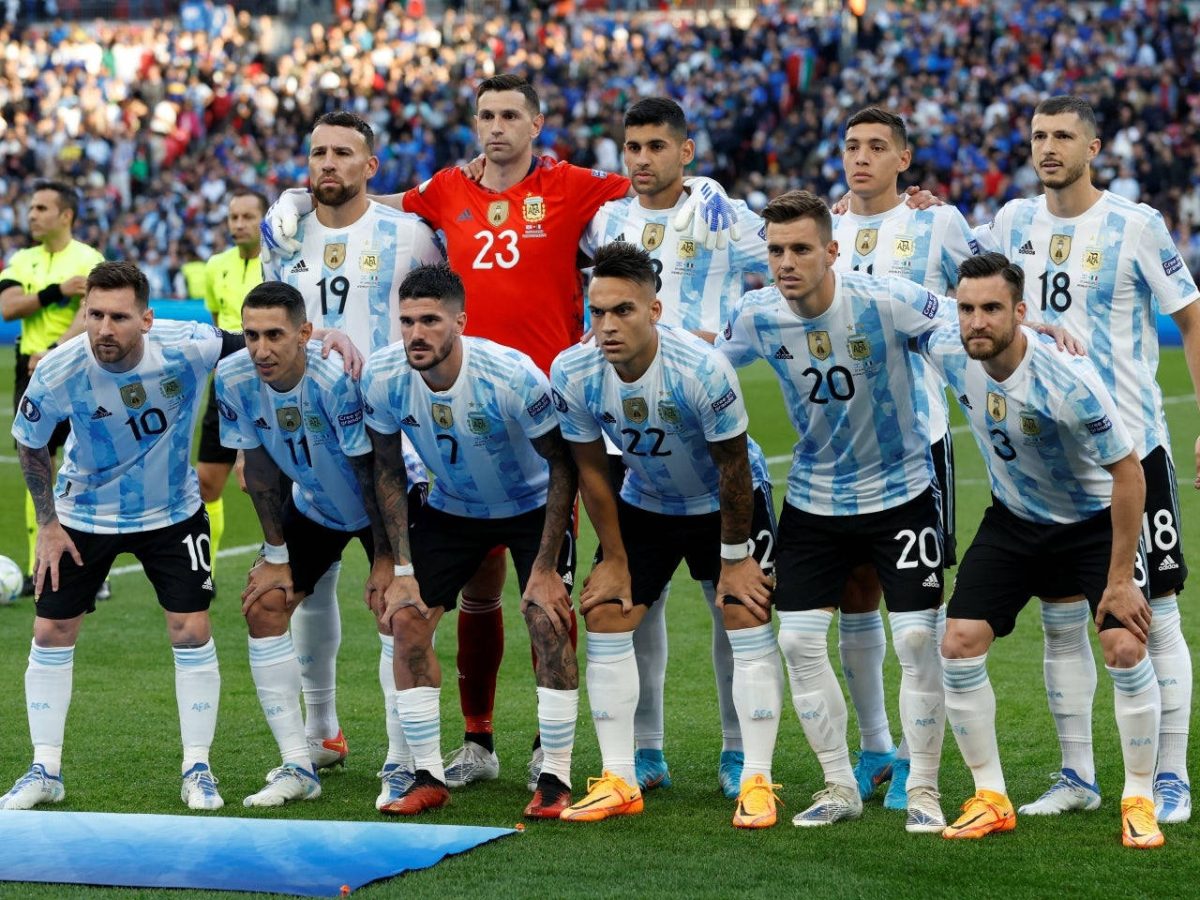
20 June 2026Three weeks of physical uncertainty, 'tough days' for non-sporting reasons, tears after the first goal. Then a record hat-trick. Messi's case at the 2026 World Cup is a natural laboratory to understand when extra-sport stress becomes a resource — and when it instead risks destroying us.
Fabio Zarra · Sports Psychologist · Sport Psychology Center · June 17, 2026
1. The facts, reconstructed accurately
On May 24, 2026, three weeks before Argentina's World Cup debut, Lionel Messi left the field during Inter Miami–Philadelphia Union holding his left thigh. Inter Miami's official diagnosis mentioned a "muscle overload associated with fatigue of the left hamstring": no structural injury, but uncertain recovery times. Messi missed the warm-up friendlies against Honduras and Iceland. He arrived at the World Cup having played at a reduced pace, not knowing for sure how his muscle would respond.
On June 17, 2026, in his 200th match wearing the Argentina jersey, he scores in the 17th minute against Algeria. He stops. He cries. It is not a cry of sporting joy: he clarifies this himself at the press conference — "It was something completely unrelated to football. I have gone through difficult days, I am grateful to the entire delegation and to my teammates who have always been by my side. They gave me a lot of strength." Then he returns to the field. He scores two more times. Hat-trick, 3-0 against Algeria, all-time World Cup goal record reached at 38 years old.
In the conference he also mentioned having watched, during the weeks of uncertainty, a documentary about Rafael Nadal: an athlete who had lived with chronic pain and continued to compete for years beyond any medical prognosis. Not a minor detail: a deliberately sought model of coping.
| “It was something completely unrelated to football. I went through difficult days. My teammates gave me a lot of strength to make me feel well.” — Lionel Messi, post-match press conference, June 17, 2026 |
2. Non-sport stressors: what happens off the field comes onto the field
Sports psychology has long treated stress factors as if they were confined to the competitive environment: injuries, competition pressure, demanding coaches, technical errors. Recent literature instead shows that this separation is an illusion.
Fletcher, Hanton, and Mellalieu (2006) identified three main categories of stressors in elite athletes: competitive stressors (underperformance, mistakes), organizational stressors (relationship with staff, logistics, media), and personal non-sport stressors — private life events such as bereavements, relationship crises, illnesses of oneself or family members. More recent studies (McLoughlin et al., 2021) show that cumulative exposure to non-sport stressors is associated with higher levels of anxiety and depressive symptoms and reduced psychological well-being in elite athletes — independently of sporting factors.
The mechanism is that of spillover: what happens in one area of life tends to spill over into another. An athlete experiencing a personal crisis carries that crisis with them into the locker room, onto the field, during the warm-up. It is not a matter of mental strength or weakness: it is the physiology of stress. Cortisol does not distinguish between grief and a sporting defeat.
In Messi's case, the picture is made up of two overlapping stressors: the muscle injury (sports-related stressor, with a component of uncertainty about the body) and something private that he himself did not want to name (non-sport personal stressor). The overlap is psychologically significant: uncertainty about one's own body already produces activation of the HPA axis (hypothalamus–pituitary–adrenal); adding a private stressor means saturating the available coping resources.
3. Challenge or Threat? How the brain evaluates competition under pressure
The central question of performance psychology under adversity is not 'how much stress there is' but 'how that stress is appraised.' Jones et al. (2009) formalized this principle in the Theory of Challenge and Threat States in Athletes (TCTSA), based on Blascovich and Mendes' (2000) biopsychosocial model and on the classic work of Lazarus and Folkman (1984) on cognitive appraisal.
The theory distinguishes two states: the challenge state, in which the athlete perceives their resources as superior or adequate to the demands of the situation, and the threat state, in which the perceived resources are not enough to cope with the demands. The two states produce different, distinct, and measurable cardiovascular responses: challenge activates an efficient profile of energy mobilization; threat produces vasoconstriction, reduced anaerobic power, impaired decision-making, and an increased risk of choking under pressure.
| It is not the amount of stress that determines performance. It is the cognitive appraisal of that stress — challenge or threat — that changes physiology and field outcome. |
Messi arrived at his debut in an objectively high-risk scenario: not at peak fitness, carrying private emotional weight, 39 years old, last possible World Cup, defending reigning world champion. All the factors for a maximum threat appraisal. And yet the hat-trick shows that something worked differently. What kept him in a state of challenge instead of threat? Three elements, also identifiable from his press conference:
- The social support received. «My companions gave me so much strength»: it is not rhetoric. It is the precise description of the mechanism that literature calls stress buffering — perceived support reduces threat appraisal by lowering the gap between available resources and the demands of the situation.
- The actively sought coping model. The documentary on Nadal: an athlete who has lived with pain for years while continuing to win. This is vicarious modeling (Bandura, 1977): deliberately seeking a reference model with characteristics similar to one's own situation to increase self-efficacy.
- The long experience of self-regulation. At almost 39 years old, with four World Cups behind him, Messi has a well-established repertoire of emotional regulation strategies that research associates with greater performance stability under stress (Gould et al., 2002).
4. Social support as a technical resource, not sentimental
"I thank the entire delegation and my teammates": from the outside it seems like ritual gratitude. From the perspective of sports psychology, it is the description of an active mechanism that protected the performance.
Rees and Freeman (2009) demonstrated in a controlled experimental context that social support — operationalized as informational, emotional, and tangible support — directly improves objective performance in precision sports. Gould et al. (2002) identified social support as one of the key predictors of Olympic performance. The proposed mechanism is that perceived support increases self-efficacy, reduces cognitive anxiety, and shifts the appraisal of the competition from threat to challenge.
The theoretical reference model is Rees and Hardy's (2004) matching hypothesis: support is more effective when the type of support offered corresponds to the type of stressor faced. Messi's private-emotional stress required emotional support (presence, listening, closeness); the physical stress of injury required informational support (medical staff) and tangible support (load management). When both are present and aligned, the buffer becomes maximal.
The Argentine delegation has evidently functioned as an integrated support system. This is no coincidence: national teams that arrive at the World Cup with structured psychological support programs — not only individual but also relational and group-based — show more stable performance results in the knockout stages (Henriksen et al., 2014).
5. Tears on the field: functional release or risk signal?
The most misunderstood moment of the evening was probably the crying. The media interpreted it as 'emotion', social media as 'weakness' or 'human greatness' depending on the tribe one belongs to. Neither interpretation is useful.
From the perspective of clinical and sports psychology, crying after a goal — in an athlete who was carrying a high emotional load accumulated over the previous weeks — is compatible with what Pennebaker (1986, 1997) called emotional disclosure: emotional expression as a process of discharging accumulated inhibitory load. Decades of research show that emotional disclosure produces measurable physiological benefits: reduced stress reactivity, improved immune function, reduced trait anxiety.
In operational terms: Messi had carried an emotional load compressed for weeks. The goal — a moment of positive resolution of a long uncertainty — produced a release. That release likely freed cognitive and attentional resources that were partially occupied by the suppressed emotional load. What followed — two more goals — is consistent with this reading.
| Crying was not a sign of weakness. It was the sign that the emotional regulation system was working — not despite the crisis, but thanks to the ability to get through it. |
This does not mean that tears on the field are always functional. The line between adaptive disclosure and dysregulation is thin and depends on how well the athlete's emotional regulation system is trained. An athlete with poor emotional regulation who cries during a game may find themselves in a state of overwhelm that worsens performance. The difference lies in the trajectory: Messi's crying lasted a few seconds, then he returned to the field and scored. This indicates functional self-regulation, not dysregulation.
6. The risks: when extra-sport stress becomes a trap
Messi performed. But it is important not to turn this case into an apology for stress or into a message like 'strong athletes perform better when they suffer.' The literature clearly shows the risks of prolonged exposure to non-sport stressors on athletes' performance and psychological health.
| RISKS of extra-sport stress | FATTORI PROTETTIVI documentati |
| Cognitive spillover • The emotional load occupies attentional resources, diverting them from tactical concentration • Reduction in the quality of decision-making in high-pressure situations • Greater vulnerability to choking at critical moments of the competition | Aligned social support • Reduces threat appraisal by increasing perceived resources • Direct predictor of Olympic performance (Gould et al., 2002) • More effective when ‘matched’ to the type of stressor (Rees & Hardy, 2004) |
| HPA axis hyperactivation • Chronically elevated cortisol worsens working memory and cognitive flexibility • Increased risk of injuries due to reduced proprioceptive alertness • Compromised sleep quality, impacting recovery and preparation | Active coping models • Deliberate search for role models (Bandura, 1977): e.g. Nadal for Messi • Structured emotional disclosure: expressive writing, dialogue with a psychologist • Stable pre-game routines that reduce variability in emotional state |
| Chronic threat appraisal • Perceiving insufficient resources produces vasoconstriction and reduced anaerobic power • Increased reaction time and deterioration of self-regulation • Impulsive behaviors, tactical errors, difficulty managing critical moments | Cognitive reappraisal • Reinterpreting the stressor as a challenge changes the physiological response • Challenge CV reactivity positively predicts soccer performance • Trainable: working with a psychologist accelerates and stabilizes this process |
7. What we can learn — at any level
The Messi case is not reserved for superstars. The mechanisms at play are universal and reappear every Sunday, in every category, on every field.
- Do not separate the person from the athlete. Private stress always comes into play. The question is not "Can I stop thinking about it?" but "Do I have the resources to manage it?" Ignoring extra-sport factors means managing only half of the system.
- Social support is not optional. The Argentine delegation functioned as a buffer system. Building trust relationships before a crisis — not during it — is the only way to activate this mechanism when needed. Research shows that perceived support matters more than support received in objective terms (Rees & Hardy, 2004).
- Actively seeking role models is an evidence-based strategy. Messi did not wait to feel good: he deliberately looked for a reference (Nadal) to show him that it is possible to perform within adversity. This is vicarious modeling — a self-efficacy tool with a solid empirical basis.
- Emotional disclosure is not weakness: it is psychological hygiene. Suppressing emotions does not eliminate them: it consumes resources. Having a channel for expression—whether with a psychologist, with friends, or in written form—frees up those resources for performance. Messi's crying after the goal was the end of a suppression process, not the beginning of a crisis.
- Emotional disclosure is not weakness: it is psychological hygiene. Suppressing emotions does not eliminate them: it consumes resources. Having a channel for expression—whether with a psychologist, with friends, or in written form—frees up those resources for performance. Messi's crying after the goal was the end of a suppression process, not the beginning of a crisis. ...
visit our website www.sportpsychologycenter.com
Scientific references
Bandura, A. (1977). Self-efficacy: Toward a unifying theory of behavioral change. Psychological Review, 84(2), 191–215.https://www.sciencedirect.com/science/article/abs/pii/0146640278900024
Blascovich, J., & Mendes, W. B. (2000). Challenge and threat appraisals: The role of affective cues. In J. P. Forgas (Ed.), Feeling and thinking: The role of affect in social cognition (pp. 59–82). Cambridge University Press.
Fletcher, D., Hanton, S., & Mellalieu, S. D. (2006). An organizational stress review in competitive sport. In S. Hanton & S. D. Mellalieu (Eds.), Literature reviews in sport psychology (pp. 321–374). Nova Science.
Gould, D., Greenleaf, C., Chung, Y., & Guinan, D. (2002). A survey of U.S. Olympic coaches. The Sport Psychologist, 16(3), 229–250.
Jones, M., Meijen, C., McCarthy, P. J., & Sheffield, D. (2009). A theory of challenge and threat states in athletes. International Review of Sport and Exercise Psychology, 2(2), 161–180.
Lazarus, R. S., & Folkman, S. (1984). Stress, appraisal, and coping. Springer.
McLoughlin, E., Fletcher, D., Slavich, G. M., Arnold, R., & Moore, L. J. (2021). Cumulative lifetime stress exposure, mental health, and well-being in elite sport. Psychology of Sport and Exercise, 52, 101823.
Meijen, C., Turner, M., Jones, M. V., Sheffield, D., & McCarthy, P. (2020). A theory of challenge and threat states in athletes: A revised conceptualization. Frontiers in Psychology, 11, 126.
Pennebaker, J. W., & Beall, S. K. (1986). Confronting a traumatic event. Journal of Abnormal Psychology, 95(3), 274–281.
Pennebaker, J. W. (1997). Writing about emotional experiences as a therapeutic process. Psychological Science, 8(3), 162–166.
Rees, T., & Freeman, P. (2009). Social support moderates the relationship between stressors and task performance through self-efficacy. Journal of Social and Clinical Psychology, 28(2), 244–263.
Rees, T., & Hardy, L. (2004). Matching social support with stressors. Psychology of Sport and Exercise, 5(3), 319–337.
Note on sources: the factual data on Messi are taken from post-match press conference statements (June 17, 2026) and official communications from Inter Miami (May 26, 2026). The information on the injury has been verified on Eurosport.it, Sky Sport, and Goal.com. The statements about the documentary on Nadal are reported by Fanpage.it (June 17, 2026).

Fabio Zarra
1 Comment
[…] che abbiamo già trattato in profondità nell’articolo su Messi al Mondiale 2026 (“Giocare oltre il limite”, 18 giugno 2026). Qui ci concentriamo su un angolo diverso e finora inesplorato: cosa dice la scienza sulla […]