
Vingegaard, king of the Giro: head before legs
31 May 2026Serena Williams returns to the court at 44.
3 June 2026La nostra VR funziona con la stessa logica neuroscientifica.
The Secret of Mental Training.
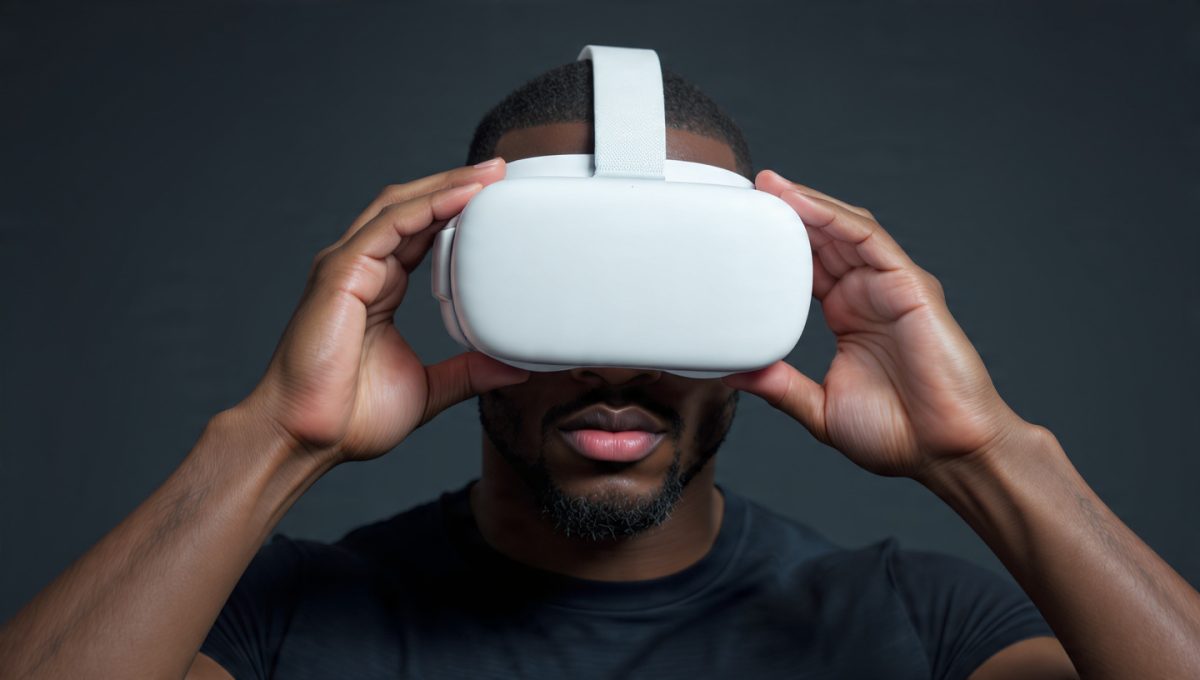
Professor Riccardo Ceccarelli's Mental Economy Training—digital simulations, biofeedback, adaptive cognitive stress management—applies consolidated neuroscientific principles that transcend the sporting discipline. Sport Psychology Center's VR Experiences operate within the same paradigm: the immersive environment is football-themed, but the neuropsychological skills developed are universal and transferable to any competitive context.
On June 1, 2026, Gazzetta dello Sport devoted extensive coverage to an aspect of Jannik Sinner's preparation that goes far beyond tennis technique: the systematic use of virtual Formula 1 simulators as a cognitive training tool. This isn't a media curiosity. On the contrary, it's one of the most well-documented and scientifically sound applications of mental performance training available today in high-performance sports.
1. Mental Economy Training: origins and principles
1.1 Formula Medicine and Riccardo Ceccarelli
Formula Medicine is a sports medicine center founded by Dr. Riccardo Ceccarelli in Viareggio, Italy, and has been active since the late 1980s. The facility was created to meet a specific need: to prepare Formula 1 drivers—a category in which the window of error is nearly zero and cognitive pressure is among the highest in any sport—to optimally manage their mental resources during races. Over the course of thirty years, the center has worked with some of the greatest drivers in history, from Ayrton Senna to Charles Leclerc and Max Verstappen.
In recent years, the methodology has been successfully extended to athletes from various disciplines: alpine skiing (Mikaela Shiffrin, Federica Brignone), swimming (Gregorio Paltrinieri), tennis (Jannik Sinner), video refereeing (VAR), pit stop mechanics, and business executives. This transversality is not accidental: it is empirical proof that the method acts on fundamental neuropsychological mechanisms, independent of the sport practiced.
1.2 The core of the method: brain self-awareness and automatization
Mental Economy Training (MET) is based on a central neuroscientific principle: optimal performance is achieved not by maximizing cognitive effort, but by minimizing the cerebral energy expenditure required to produce a high-level performance. As Ceccarelli stated, "the champion is the one who achieves performance with the least mental energy expenditure."
Neurophysiologically, this corresponds to optimizing the ratio between activation of the prefrontal cortex—the seat of deliberate, slow, and energy-intensive reasoning—and the automation of processes in subcortical circuits, particularly in the basal ganglia and cerebellum. When a cognitive ability is sufficiently trained, it migrates from conscious prefrontal control to automated, more efficient management.
“On the computer you do exercises and they calculate how much of your brain you used and everything, then they help you to make it as automatic as possible with using less time and less brain.” — Jannik Sinner, interviewed by The Athletic
The typical exercise involves the athlete wearing a headband with biophysiological sensors and driving a race car in a virtual environment. The more the athlete is able to isolate themselves from the distractions on the screen—sounds, peripheral visual stimuli, irrelevant information—the faster the car speeds. Biofeedback is immediate, continuous, and objective: the system measures attentional quality in real time and provides behavioral data that can be directly interpreted by the athlete.
2. The neuroscientific basis: what the research says
2.1 Controlled stress and consolidation of cognitive skills
The practice of repeated exposure to controlled stressors—known in the literature as stress inoculation training—is one of the most studied approaches in performance psychology. Meichenbaum (1985) demonstrated that gradual and progressive exposure to situations with high cognitive demands produces an increasing ability to regulate the stress response under real-world pressure. Subsequent meta-analyses (Hourani et al., 2011; Driskell et al., 2006) have confirmed the effectiveness of this approach in military, sports, and clinical contexts.
The Formula Medicine driving simulator is, in effect, a stress inoculation device: the athlete is placed in a situation of increasing cognitive complexity, with demands for rapid decision-making and distracting stimuli, in a controlled and safe environment. Systematic repetition builds what the literature calls stress resilience: the ability to maintain cognitive efficiency—concentration, response speed, decision-making accuracy—despite the physiological activation associated with competitive pressure.
2.2 Virtual reality and neuroplasticity: the cross-sport transfer
The most scientifically relevant question—and most pertinent to the context of the Sport Psychology Center—is that of transfer: do cognitive skills acquired in a virtual environment transfer to real-world performance in a different context?
The answer in the neuroscientific literature is affirmative, provided that specific methodological conditions are met. Neuroimaging studies have shown that exposure to high-fidelity immersive simulations activates the same neural networks involved in real action execution (Decety & Grèzes, 2006; Jeannerod, 2001). This phenomenon—known as functional equivalence—constitutes the biological foundation of mental training through visualization and simulation.
«Evidence from functional magnetic resonance imaging studies shows that observing, imagining, and executing an action activate overlapping neural circuits, including supplementary motor areas, the premotor cortex, and the mirror neuron system.» — Jeannerod, M. (2001). Neural simulation of action: a unifying mechanism for motor cognition. NeuroImage, 14(1), S103–S109.
A second body of research concerns the cross-domain transfer of cognitive skills. Studies on dual-task training—the simultaneous training of multiple cognitive functions—have shown that attentional control, inhibition of irrelevant responses, and cognitive load management skills transfer effectively between structurally different tasks (Green & Bavelier, 2003; Strobach et al., 2012). The immersive environment, in this sense, is a tool for training higher-order executive functions, not for learning sport-specific skills.
2.3 The climber's theory and the focus on the present
The second conceptual pillar of the Ceccarelli method—the so-called "climber's theory"—finds a precise parallel in the literature on mindfulness applied to sport. The analogy is telling: someone climbing a mountain cannot constantly think about the summit, but must focus on the next step to maintain balance. In psychological terms, this is a principle of present-moment focus that reduces the cognitive interference of future worries and past ruminations.
Kabat-Zinn (1994) formalized this approach in the framework of mindfulness-based stress reduction, and numerous applications to sport have subsequently demonstrated the effectiveness of present-moment awareness on the control of competitive anxiety and on the quality of performance (Gardner & Moore, 2007; Birrer et al., 2012). In particular, the meta-analysis by Bühlmayer et al. (2017) — conducted on 17 randomized controlled trials with high-level athletes — found significant positive effects on concentration, anxiety regulation, and objective performance.
2.4 Biofeedback and adaptive learning loops
The biofeedback component—real-time physiological measurement through sensors—represents a further element of scientific robustness. Research on neurofeedback and biofeedback applied to sport has demonstrated that the availability of immediate and objective feedback on psychophysiological state accelerates the learning of self-regulation strategies (Sherlin et al., 2011; Raymond et al., 2005).
The mechanism is classic operant conditioning: the athlete receives a reinforcement (the car's speed increases) in response to an adaptive behavior (reduction of attentional interference), and progressively learns to reproduce that behavior voluntarily and consciously. With repeated practice, the process tends to become automatic, reducing the cognitive load required to maintain it—precisely the principle of Mental Economy Training.
3. Universality of the method: from F1 to any athlete
3.1 A method born for speed, applied to everything else
The spread of the Formula Medicine method to athletes in radically different disciplines—from alpine skiing to swimming, from tennis to refereeing—is not a marketing ploy. It is empirical confirmation of a principle consistently supported by cognitive science: higher-order executive functions—attentional control, inhibition, working memory updating, cognitive switching—are domain-general. They are trained in one context and transferred to another.
This is precisely why Sinner doesn't have a mental coach specialized in tennis. He has a sports doctor with a background in Formula 1, equipped with tools derived from the culture of speed. The content of the tool (a car race) is irrelevant compared to the cognitive processes it activates (attentional control under stress, rapid decision-making, emotional regulation after mistakes).
3.2 The context of Sport Psychology Center
Sport Psychology Center's VR Experiences operate within this same paradigm. The setting is football: a stadium, realistic match situations, the pressure of a competitive environment familiar to the general Italian sports audience. This is a deliberate methodological choice: an ecologically valid setting—perceived as authentic by the athlete—enhances the simulation's effectiveness because it triggers a physiological and cognitive response more similar to that of a real match.
But the setting isn't the training. A tennis player who accesses our experiences isn't learning to play soccer. They're training their attentional focus in a high-cognitive demand environment. A swimmer is working on decision-making reactivity and arousal management. A combat sports athlete is building mental resilience to error. They all use the same neurocognitive scaffolding—different content, identical mental process.
The soccer field, in this logic, fulfills the same function as the Formula 1 circuit in the Ceccarelli method: it is a device for inducing controlled cognitive stress, immersive enough to generate an authentic physiological response, structured enough to allow for precise feedback and a progressive learning path.
4. Clinical and applicative implications
From a clinical practice perspective, these principles suggest some important operational indications for the design of mental performance training programs:
Perceptual Fidelity vs. Functional Fidelity. Simulation learning research distinguishes between perceptual fidelity—how closely the simulation resembles reality—and functional fidelity—how closely it activates the same cognitive processes. It is the latter that determines transfer. A VR soccer environment can have high functional fidelity for a tennis player if it generates the same cognitive demands (divided attention, rapid decision-making, emotional regulation).
Progressive load and adaptability. As with any form of training, the principle of progression is fundamental. Exposure to increasing levels of cognitive complexity—managed over time by a professional—is a necessary condition for adaptation.
Integration with professional counseling. Immersive simulation does not replace individual psychological work: it enhances it. Interpreting physiological and behavioral responses during VR sessions requires clinical expertise to translate into personalized and effective interventions.
The story of Sinner and Formula Medicine teaches us a lesson that goes far beyond tennis. It tells us that the boundaries between sports disciplines are much less relevant—on a neuropsychological level—than the tradition of athletic training tends to suggest. The mental skills that make the difference in high-level performance—concentration under pressure, emotional regulation, quick decision-making, resilience to error—are transversal, trainable, and developed through tools that activate the right cognitive processes, regardless of the environment in which they are represented.
The mind doesn't know what sport you compete in. It knows how present you are. How reactive you are. How focused you are when everything around you is pushing you to lose your focus. This is what we train. And science—the same science that allowed Sinner to become the world's best tennis player—confirms it.
Bibliographic references
Birrer, D., Röthlin, P., & Morgan, G. (2012). Mindfulness to enhance athletic performance. Mindfulness, 3(3), 235–246.
Bühlmayer, L., et al. (2017). Effects of mindfulness practice on performance-relevant parameters and performance outcomes in sports. Sports Medicine, 47(11), 2309–2321.
Decety, J., & Grèzes, J. (2006). The power of simulation: Imagining one’s own and other’s behavior. Brain Research, 1079(1), 4–14. https://www.sciencedirect.com/science/article/abs/pii/S0006899306000102
Driskell, J. E., Sclafani, S., & Driskell, T. (2006). Reducing the effects of game day jitters. Journal of Sport Behavior, 37(1).
Gardner, F. L., & Moore, Z. E. (2007). The psychology of enhancing human performance: The mindfulness-acceptance-commitment approach. Springer.
Green, C. S., & Bavelier, D. (2003). Action video game modifies visual selective attention. Nature, 423, 534–537.
Hourani, L. L., et al. (2011). Stress inoculation training for resilience. Military Medicine, 176(7), 721–730.
Jeannerod, M. (2001). Neural simulation of action: a unifying mechanism for motor cognition. NeuroImage, 14(1), S103–S109.
Kabat-Zinn, J. (1994). Wherever you go, there you are: Mindfulness meditation in everyday life. Hyperion.
Meichenbaum, D. (1985). Stress inoculation training. Pergamon Press.
Raymond, J., et al. (2005). The effect of alpha/theta neurofeedback on personality and mood. Cognitive Brain Research, 23(2-3), 287–292.
Sherlin, L. H., et al. (2011). Neurofeedback and basic learning theory. Journal of Neurotherapy, 15(4), 292–304.
Strobach, T., Frensch, P. A., & Schubert, T. (2012). Video game practice optimizes executive control skills in dual-task and task switching situations. Acta Psychologica, 140(1), 13–24.
Sport Psychology Center | sportpsychologycenter.com
Discover VR Experiences → sportpsychologycenter.com/servizi-di-psicologia/allenamento-realta-virtuale/

Fabio Zarra