
How Fake News and Media Pressure Destroy — or Build — the Athlete’s Mind
20 June 2026When life intrudes on the field: acute grief in the elite coach
24 June 2026Sports psychology in foil
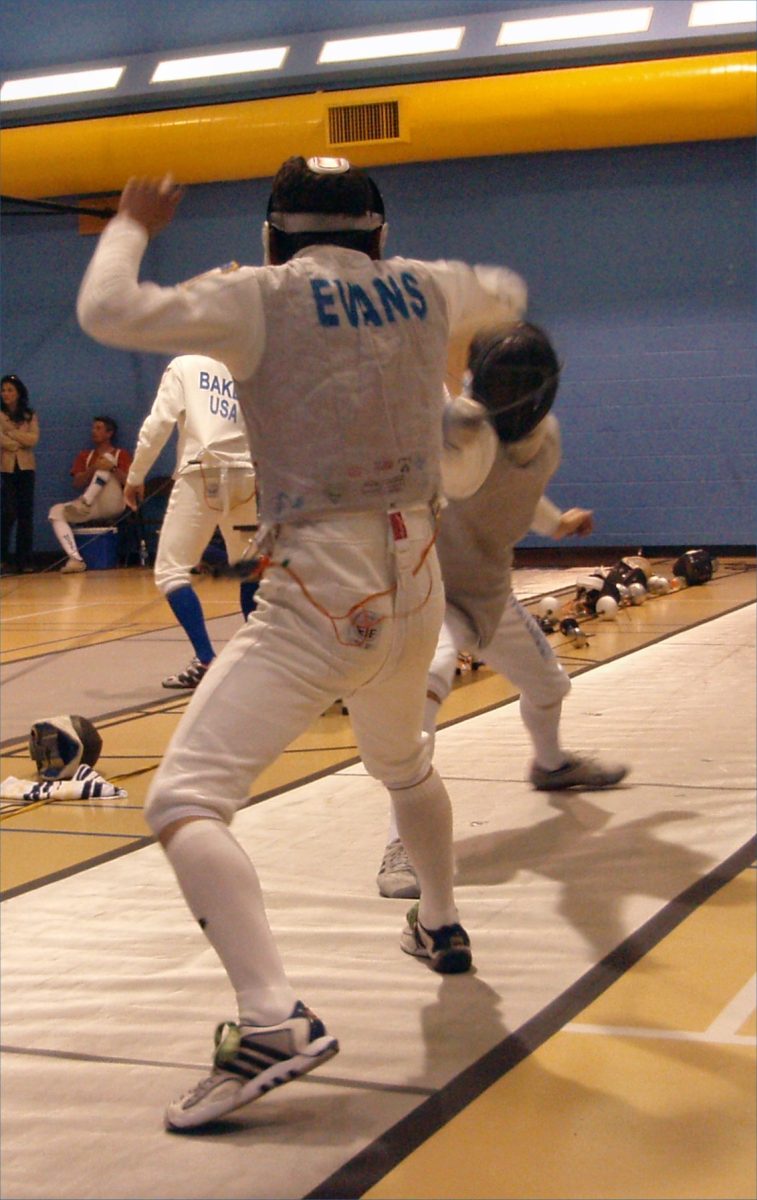
A 45-22 score that seems clear. But there were three moments behind it when the game could have gone the other way.
In Antony, France, Italy won the European men's foil team title by beating the hosts 45-22. A result that, judging by the final score alone, appears to be a clear and uninterrupted dominance.
It didn't go that way.
Between the third and fourth sets, France overturned the momentum of a match that seemed already decided. And Italy responded with one of those moments that sports psychology textbooks use as examples: a 26-2 run in the closing stages of the final.
How can this be explained? What did Macchi, Bianchi, Marini, and Lombardi do—mentally—to stay on track? Here are the three key moments of this final, interpreted through the lens of performance psychology.
01. Pauty's Reversal: When Pressure Changes Sign
Until the third set, Italy led 15-7. An eight-point advantage, a game under control, a quartet in rhythm.
Then came Maxime Pauty. In a single bout, the Frenchman dominated Tommaso Marini 13-4, turning the score around: France 20, Italy 19. In just a few minutes, the narrative of the match had completely changed.
| In sports psychology, this type of event is called a momentum shift—an abrupt change in the psychological momentum of a match. Studies on combat sports and scoring sports show that teams that experience a sudden momentum shift are significantly more likely to lose their next match (Meier et al., 2020). |
What distinguishes elite athletes isn't the absence of these moments—it's the speed with which they process them and let them go. In technical jargon, it's called cognitive reset: the ability to not carry over a previous mistake into the present of the next attack.
From the fifth bout onward, Italy put together a 26-2 lead. Twenty-six hits against two. It's not superior technical ability—that was already present before. It's emotional regulation reactivating.
| What the research says The ability to 'disconnect' from a negative action and return to the present is one of the most trainable psychological skills in elite sport. It can be trained through mindfulness techniques, reset routines, and simulating pressure situations during training. |
02. Giulio Lombardi: The psychology of a last-minute call-up
Tommaso Martini—who won bronze in the individual event on his senior European debut—withdrew as a precaution before the team competition. He was replaced by Giulio Lombardi, who had been in Italy as a reserve until then.
Lombardi had to manage one of the most psychologically delicate situations an athlete can face: being called up at the last minute, without the mental progression typical of competition-oriented preparation, to a European final against the host nation.
| The literature on psychological readiness is clear: it is not technical preparation that makes the difference in unexpected calls — it is the ability to quickly build a sense of situational competence, that is, the belief that one has the resources to deal with that specific situation at that moment (Bandura, 1997). |
Lombardi not only held firm, but contributed to a process that ultimately led to the final result. This isn't a fluke—it's the result of a solid team system: a group culture in which each athlete knows their role, even when that role suddenly changes.
| Practical Application Psychological work with sports teams includes precisely this: preparing athletes not only for their expected competitive slot, but for any competition scenario—including unexpected ones. Mental flexibility can be trained. |
03. The semi-final against Russia: 45-43 on the last thrust
Before reaching the final, Italy had to overcome one of the most tense matches of the entire competition: the semifinal against the Russian team, played on a neutral venue.
The final score was 45-43. One point. Guillaume Bianchi's final thrust separated the gold medal from the bronze medal.
| In fencing, decisions are made in fractions of a second. Researchers such as Moran et al. (2016) have documented that in close-quarters combat sports, optimal performance requires a state of ‘quiet eye’—a prolonged visual fixation on the target before the action—associated with reduced activation of the sympathetic nervous system and greater motor precision. |
Bianchi landed his final thrust at a moment when the match was on the line. It's not a question of luck: it's the ability to maintain functioning technical automatisms despite maximum pressure. What sports psychology calls performance under choking pressure—and which can be trained.
| The Pressure Paradox The more an athlete tries to consciously control an automatic technical gesture under pressure, the greater the likelihood of error. Psychological work serves precisely this purpose: maintaining control without losing the fluidity of automaticity. |
The psychological point
The 45-22 final score only tells part of the story. What it doesn't say is that this team went through a searing momentum shift, a last-minute call-up, and a match that came down to the final thrust.
The difference between a European champion and a talented team that fails to express it isn't measured in talent—it's measured in the ability to manage these three situations when they arise.
This is the work of applied sports psychology. It's not done the day before a race: it's built over time, in training, methodically.
Scientific references
Bandura, A. (1997). Self-efficacy: The exercise of control. Freeman.
Meier, C., Fleurance, P., & Dosseville, F. (2020). Psychological momentum in competitive sport: A systematic review. International Journal of Sport Psychology, 51(4), 312-338.
Moran, A., Campbell, M., Holmes, P., & MacIntyre, T. (2016). Mental imagery, action observation and skill learning. In N. J. Hodges & A. M. Williams (Eds.), Skill Acquisition in Sport. Routledge.
Sport Psychology Center · sportpsychologycenter.com
